

The Process Behind My Car Paintings
THE ART PADDOCK
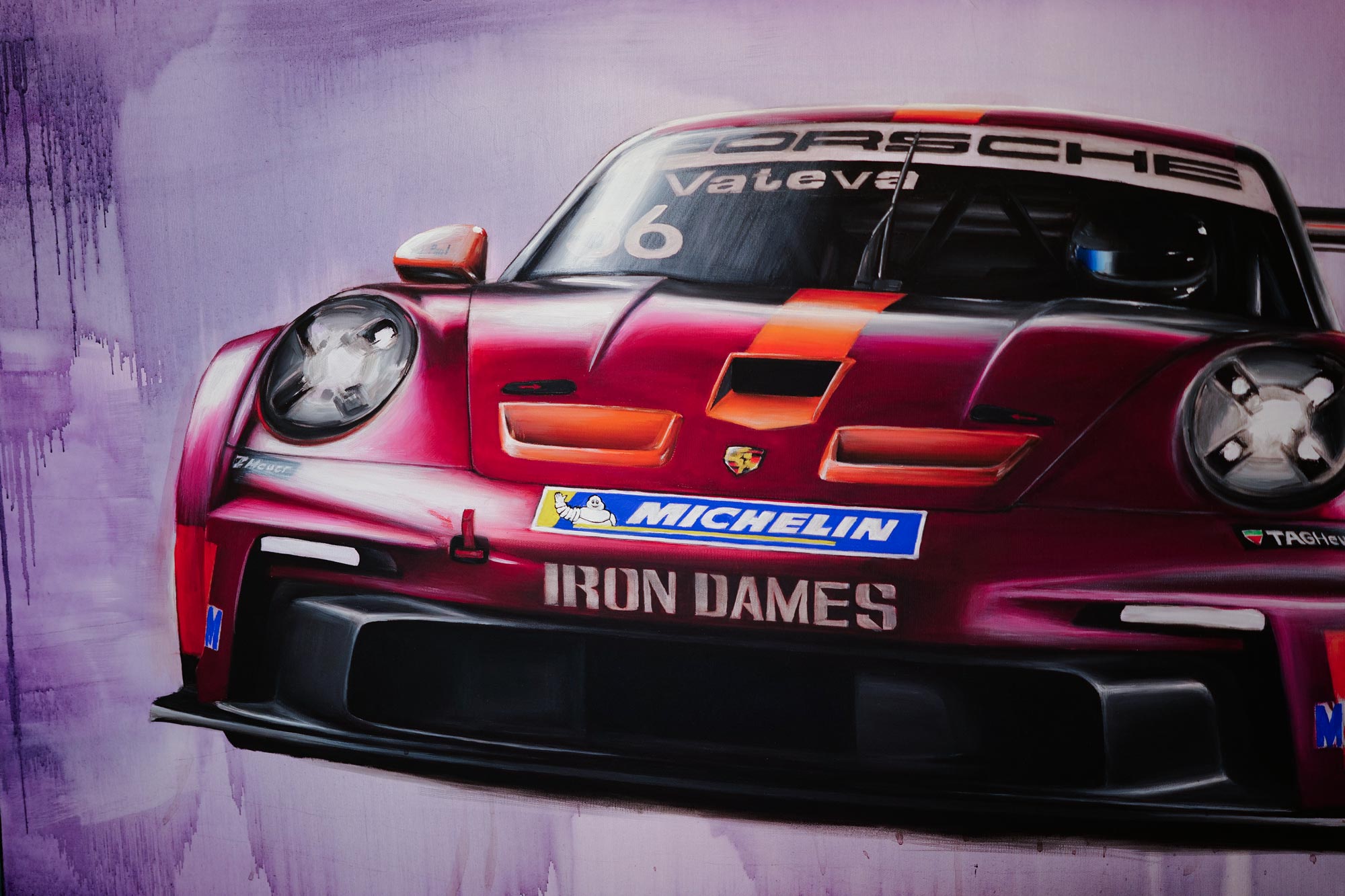
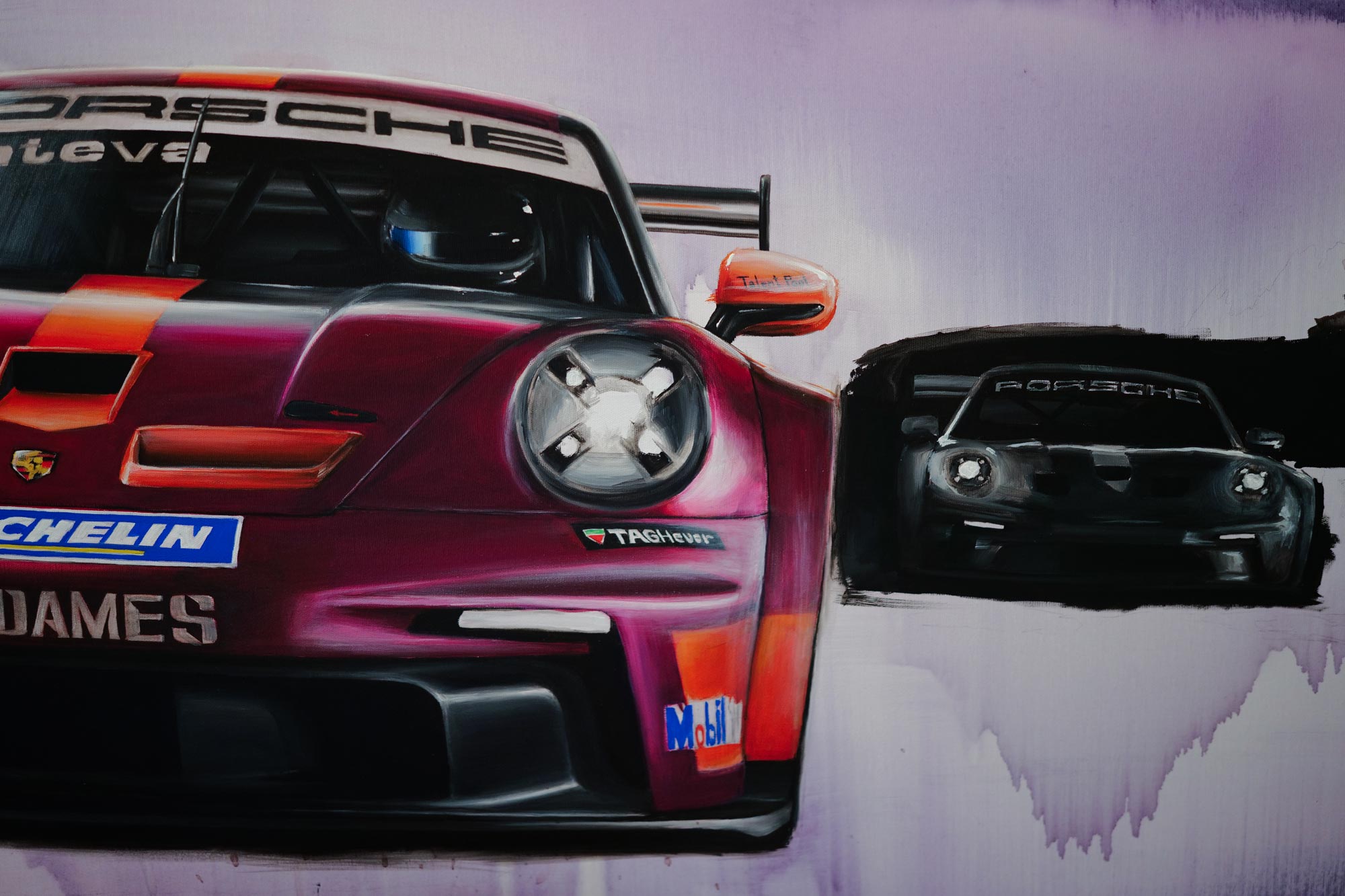
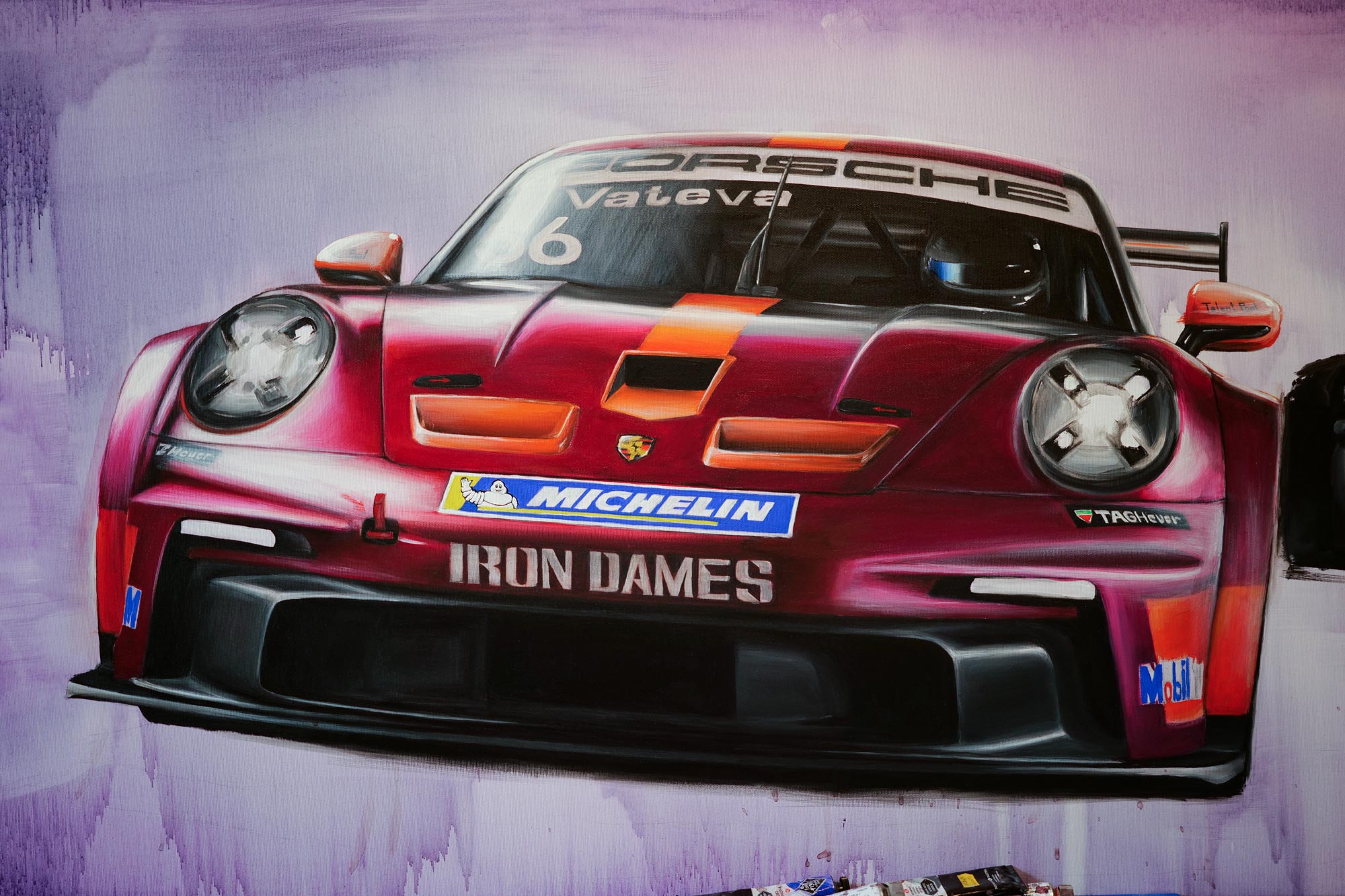
The car painting process behind every automotive artwork begins long before the first brushstroke touches the canvas. The creative process usually starts with an idea or a visual impression. Sometimes it comes from a photograph, sometimes from a moment when light falls perfectly across the surface of a car. Once the concept is clear in my mind, I begin with a pencil sketch to explore the composition and proportions.
This initial sketch is essential because it establishes the structure of the painting. It allows me to determine the balance between the different elements of the image and to plan how the light will interact with the surfaces. After the sketch is complete, the canvas is prepared with a base layer. This stage is often referred to as the underpainting. The purpose of the underpainting is not to add details, but to establish the overall atmosphere and tonal harmony of the piece.
Through subtle base colors, the painting already begins to develop a mood. Even before the final colors appear, the underpainting introduces depth and emotion into the composition. Once the foundation is established, I begin building the image layer by layer. Color is gradually introduced, and the main forms start to take shape. During this phase I focus heavily on light and shadow, because these elements define the volume and realism of the car.
Painting reflective surfaces such as chrome, polished metal, or glossy automotive paint requires patience and careful observation. Reflections are rarely simple, they distort, stretch, and shift depending on the surface.
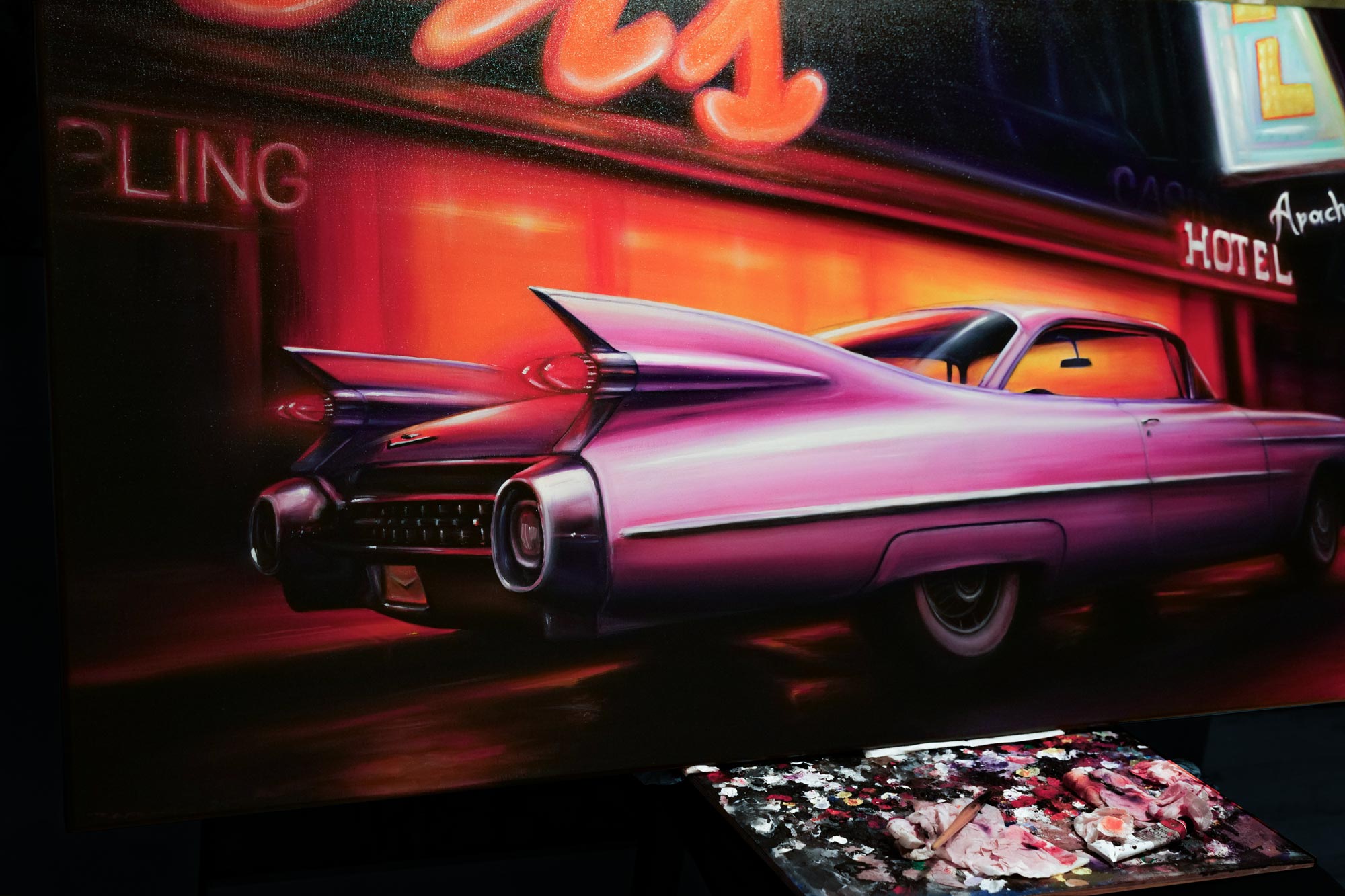
Capturing these reflections accurately is one of the most challenging but also most rewarding parts of automotive painting. In the final stage of the process, attention shifts to the smallest details. The highlights on chrome trims, the reflections inside the headlights, and the fine transitions of light across the bodywork all contribute to the final realism of the image.
Only after these details are completed does the painting receive its final varnish, which protects the surface and enhances the depth of the colors.